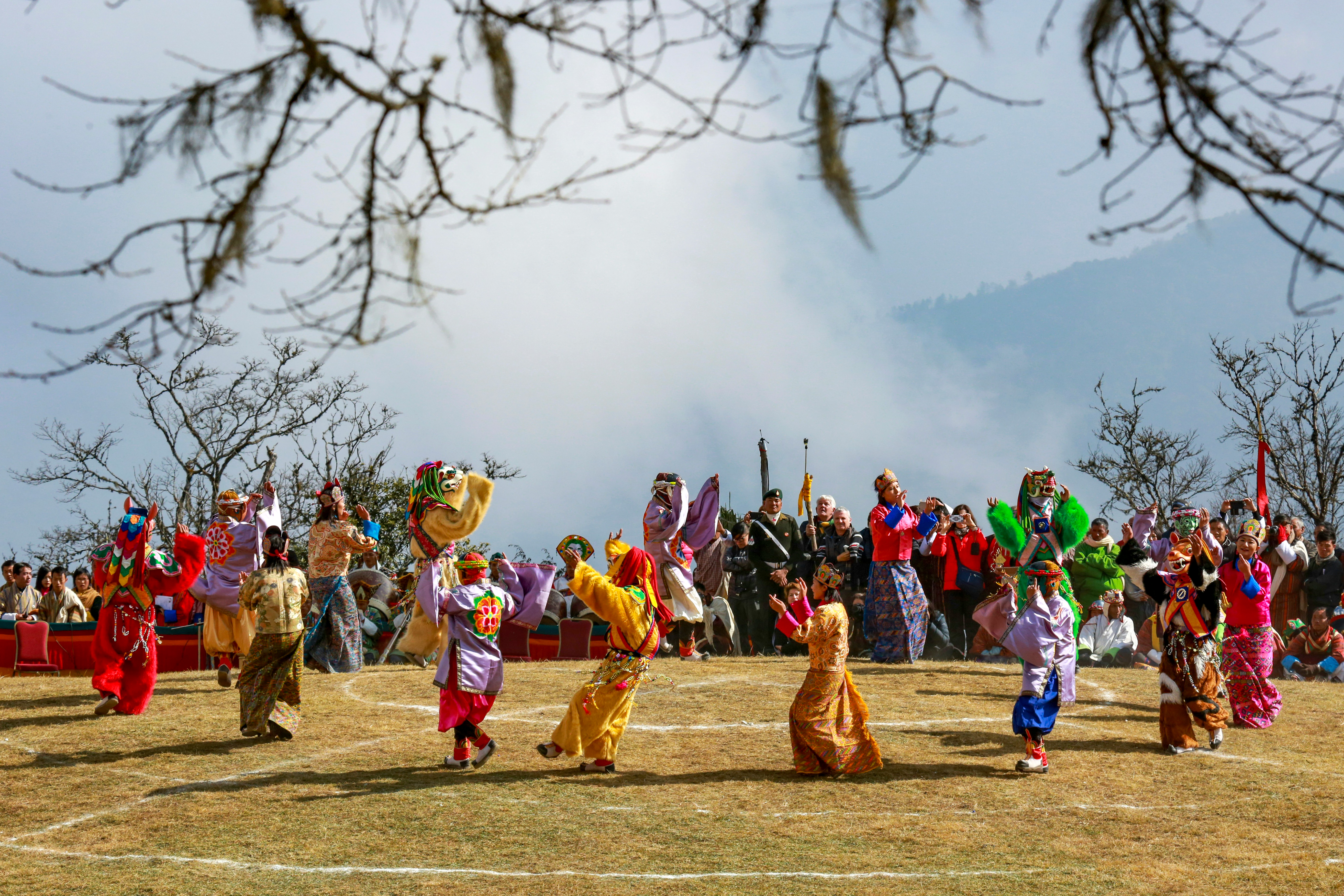

Bhutan’s national sport is archery (“Dha” in Dzongkha). It is the most popular and most important sport in the country. When Bhutan became a member of the United Nations in 1971, they then declared archery as the national sport. Archery tournaments are held across the country, under the management of Bhutan Archery Federation. Archery is played in Tsechu (festivals), between public ministries and departments, and between the dzongkhag and the regional teams. The tournaments are a way to preserve and develop the sport in Bhutan. The image of gods holding a bow and arrows appears frequently in the Bhutanese myths and legends.
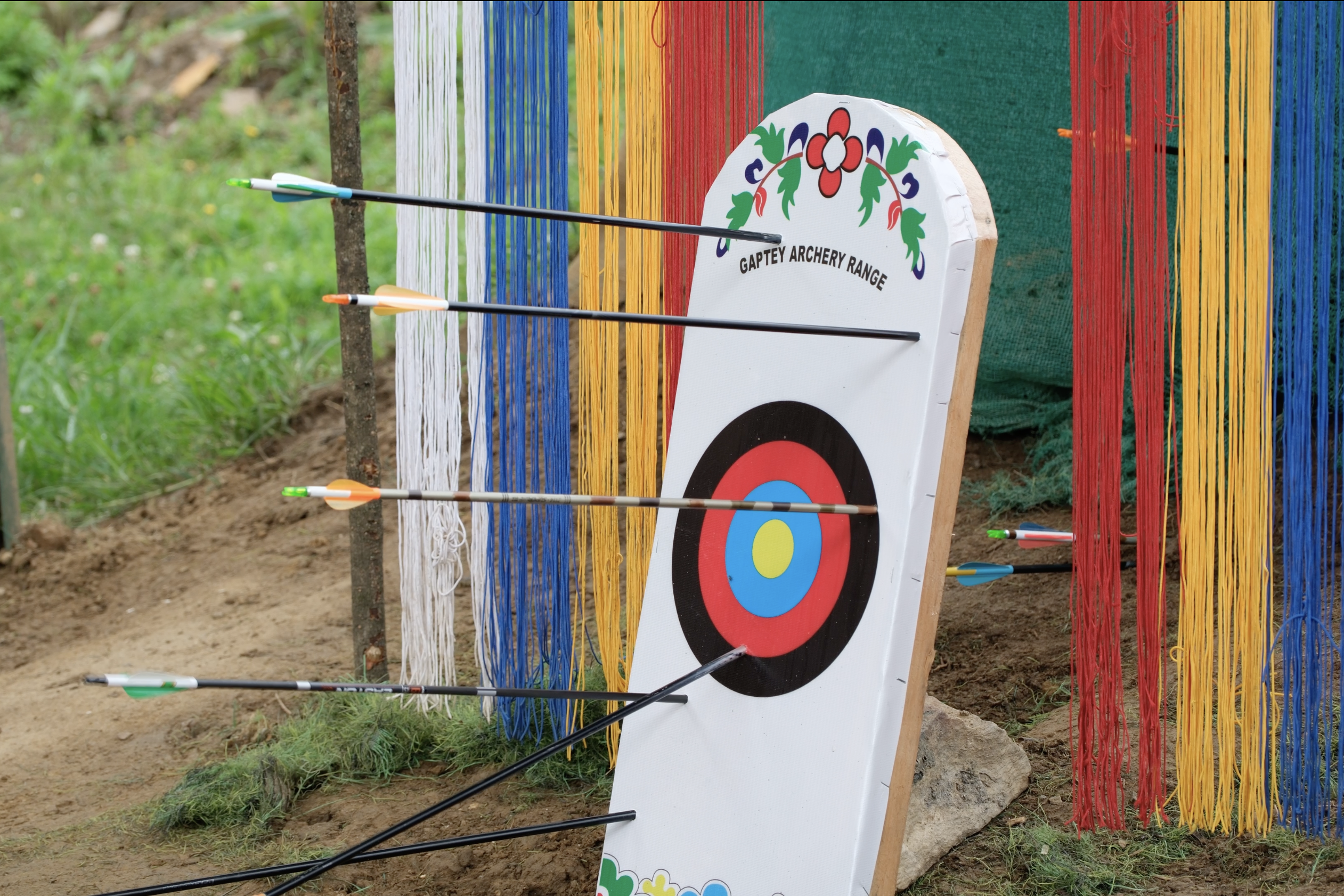
The three basic elements that any game of archery will need are a bow (Zhu), a pair of arrow (Da) for each player and targets (baa) on each side. The bow and arrows are made from specific species of bamboos. Zhu shing is the name of the bamboo species used to make the bow, which can only be collected from the warmest region of Bhutan. There are two types of bow, tab zhu and chang zhu. Tab zhu means joined bow and chang zhu is made by cutting out directly from the zhu shing in a required length. While tab zhu is now more common for its duration and flexibility, chang zhu is still relatively popular in Bhutan. To make the arrows (Da), the craftmen will use Jala Yangka – a bamboo species in Jala area, and then they will wound a special five-coloured thread below the notch and above the attached feather. Blacksmiths is one of the kinds of metal sheets used to make the arrowheads. For different purposes, the archer will use different kinds of arrow. Basically, the target (ba) is made from a white sheet attached over the front of a board, and then painted with lime. A rainbow-colour circular is painted in the middle of the target, the target is also decorated with other images of the water and earth.
The length of a traditional archery filed is approximately 130 – 145 metres (426 to 475 ft) between the two targets, which are fixed on each end of the range. Chogda is the match between two teams from two villages or even regions, this can last for 2 days. Each team consists of 11 people. However, in some cases, the number of players and be flexible, and also the way of counting the points if the two teams can reach a mutual agreement about this. Interestingly, Bhutanese archery matches have Dhakha logni – a unique way of cheering. They can sing praising songs for their team or use remarks from songs to make fun of the opponents. Yet, Dhakha logni is only allowed from the half way point of the final deciding game.
Besides the popular game of archery, Bhutanese also enjoy other doing other sports such as stone discus or Doegor, Soksom (or Sorsum) and Khuru (darts). Bhutanese men play by using two flat round-shaped stones and hurl at a target almost hidden in the ground at each of the opposite ends of the field (about 25m – 82 ft apart). Soksom is quite similar to javelin throw but players try to aim at a specific target and not to just cover the distance. Bhutanese cow herders used to play this back in the day to pass the time. Khuru is usually played during festivals. When playing khuru, heavy wooden darts pointed with a 10-centimetres (3.9 in) nail are thrown at a paperback-sized target which is 10 metres (33 ft) to 20 metres (66 ft) away.
There is nothing like witnessing a spirited archery match in person. Browse our Bhutan tour packages to experience Bhutan’s culture and festivities up close.
Culture & Heritage
Ready to Explore Bhutan?
Let us craft your perfect Bhutanese adventure
Plan Your Journey