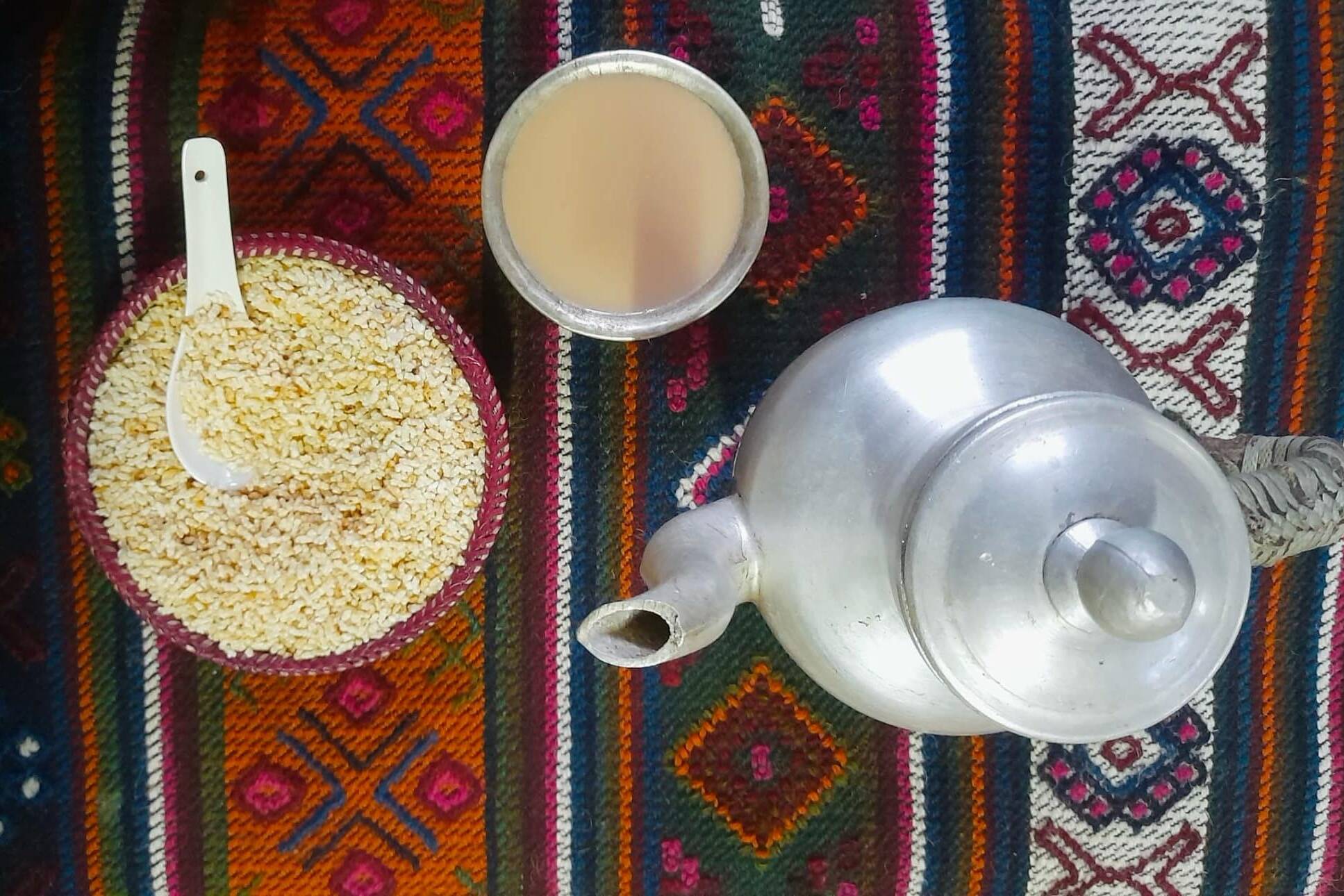

Among the many customs and traditions of Bhutanese culture, local brews have always excited interest among those who enjoy a drink or two… or even more, as the case may be, especially when they are visiting new places. Well, Bhutan’s local tipple “Ara” has had many takers, and this beloved drink showcases the rich agricultural diversity and traditional brewing techniques of the nation.
Learn how to make ara, and you’ll understand more about Bhutan and its warm, welcoming spirit.
Ingredients:
The practice of making ara varies across different regions of Bhutan, with several cereals being used. In eastern Bhutan, maize is the most commonly used cereal, although millet, rice, and wheat are also utilized. In the highlands and valleys of central Bhutan, wheat and barley are commonly used, with buckwheat also being used occasionally. In western Bhutan, wheat, rice, and barley are the main ingredients. Nowadays, apples and potatoes are also used to produce ara.
Making Ara:
The process of making ara is intricate and requires patience and care.
- Begin by boiling the chosen cereal until it is thoroughly cooked.
- Once the cereal is cooked, spread it on a bamboo mat to cool. Sprinkle powdered yeast over the cooled cereal. The yeast is typically a mix of plant powder and corn flour, produced organically.
- Transfer the yeast-coated cereal into a large jar or container, usually made from bamboo or wood. Cover the container with thick blankets and keep it in a warm place, especially near traditional ovens in the kitchen. Allow it to ferment for a month, or 2-3 weeks if the room temperature is warmer, as it will become ready sooner.
- After fermentation, the mixture, known as lum, is ready for distillation.
- Use a cylindrical pot called arazang for distillation. Place one bowl of the fermented cereal inside the pot. Insert a small container within the pot using a holder to collect the distilled droplets.
- Place another bowl filled with cold water on top of the cylinder pot.
- Make a fire underneath the arazang. The cold water on top will gradually become hot.
- When the water on top becomes hot, replace it with cold water. This step is crucial as it aids in the condensation and evaporation process inside the cylinder pot.
- As the mixture heats, alcohol vapor rises and condenses on the cooler surface of the top bowl, eventually dripping into the small container inside the pot.
- The drops collected in the small pot are ara. The distillation process typically takes about two to three hours. Then it’s ready to serve!
Ara is usually consumed hot and can be served in various ways: neat to savor the delicate flavors, with butter and poached egg for a smooth, rich experience, or with scrambled egg and rice for a hearty and satisfying drink.
Typically, creamy, clear, or white in color, ara tastes somewhat like a chewy sake. It’s perfect for warming up on a chilly evening or sharing with friends and family.
Having a cup of ara is an immersive dive into Bhutanese culture. Making and sipping on ara connects you to a centuries-old tradition that highlights the ingenuity and strong community bonds in Bhutan. So, grab your ingredients and start brewing – here’s to celebrating Bhutanese heritage, one sip at a time!
Bhutan’s traditions are best understood by living them. Explore our Bhutan tour packages and immerse yourself in the kingdom’s culture, cuisine, and warmth.
Food & Drink
Ready to Explore Bhutan?
Let us craft your perfect Bhutanese adventure
Plan Your Journey