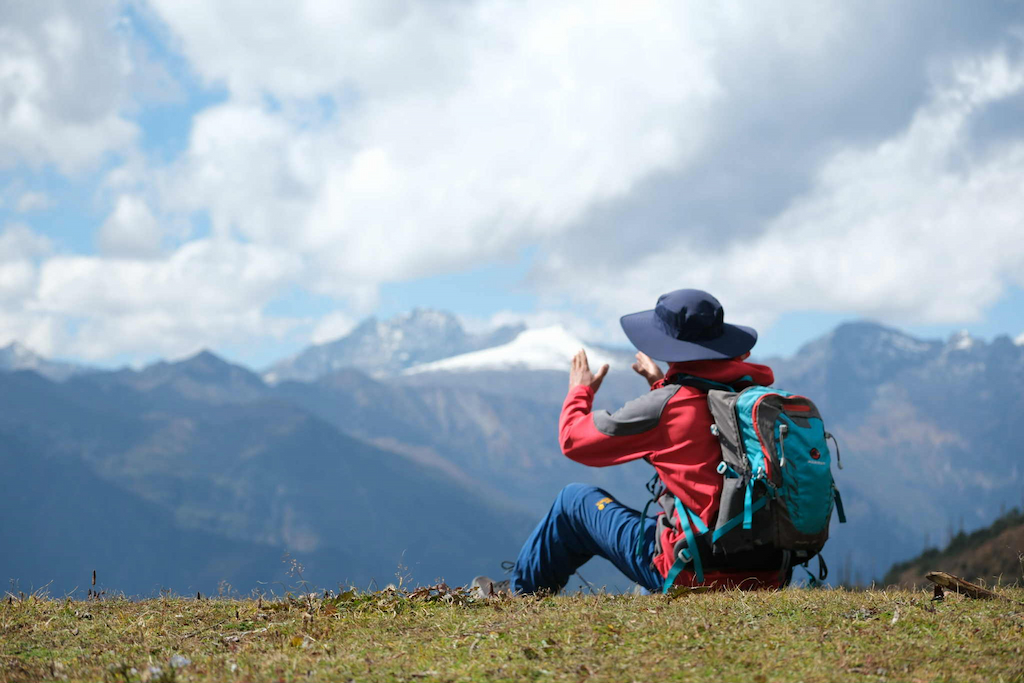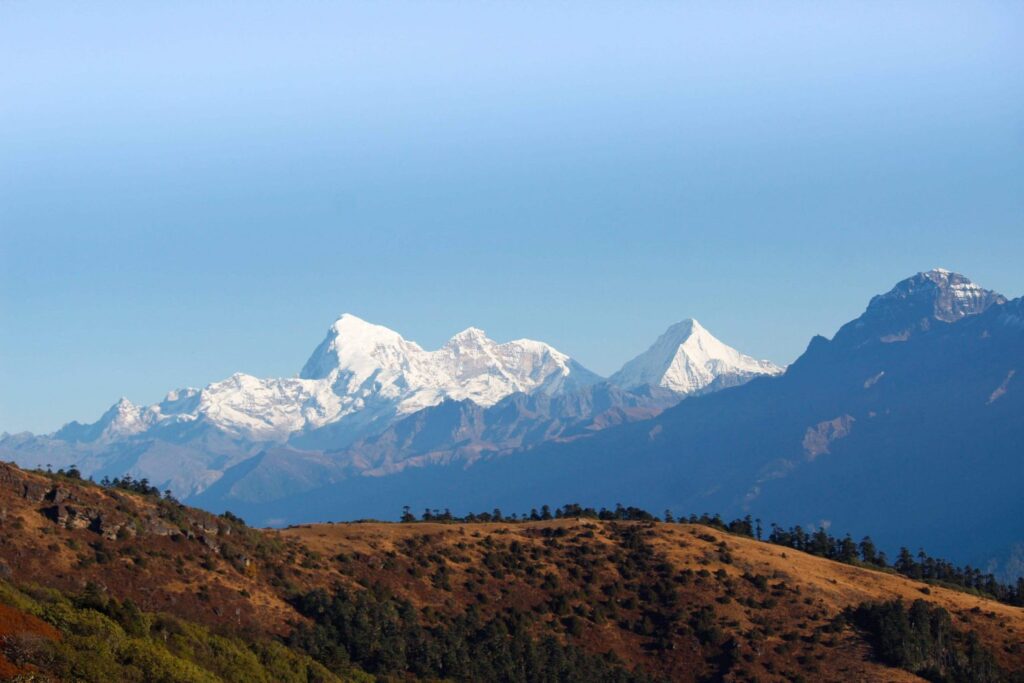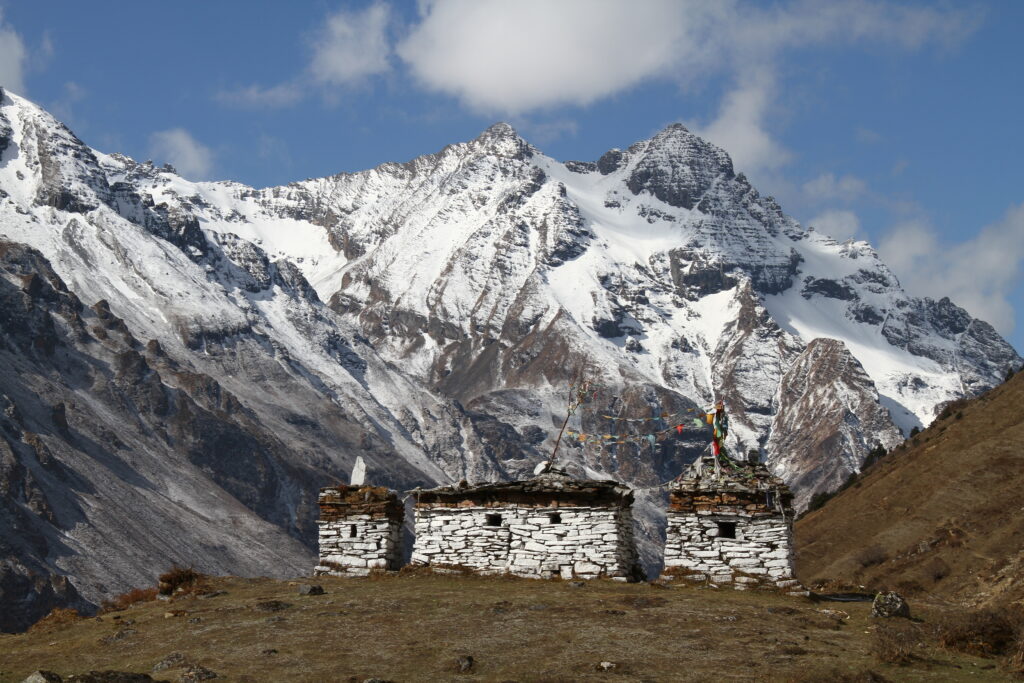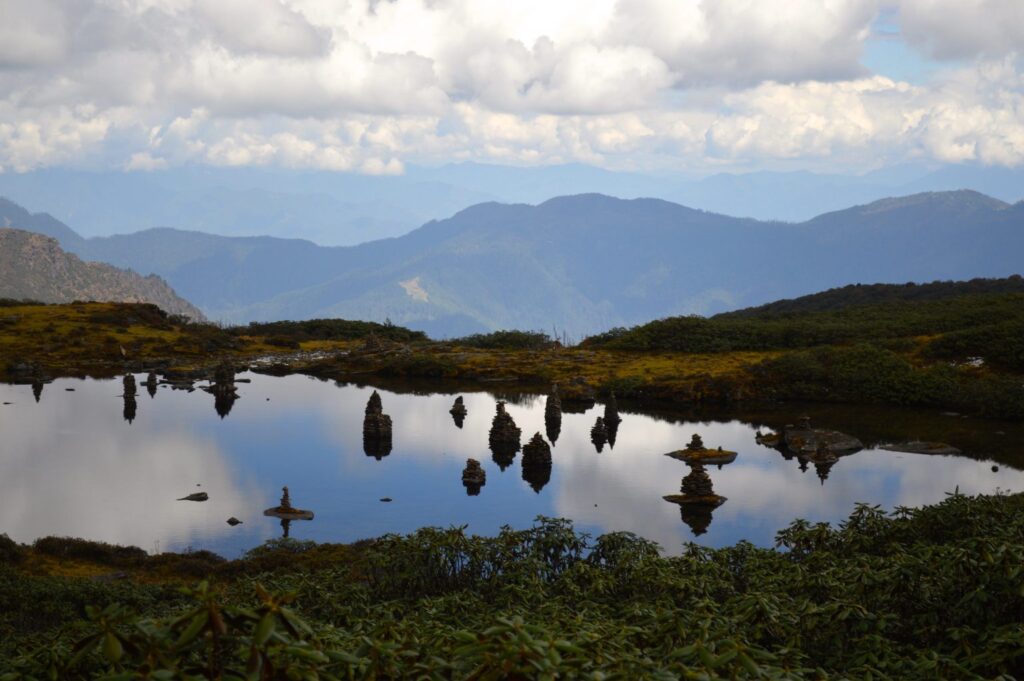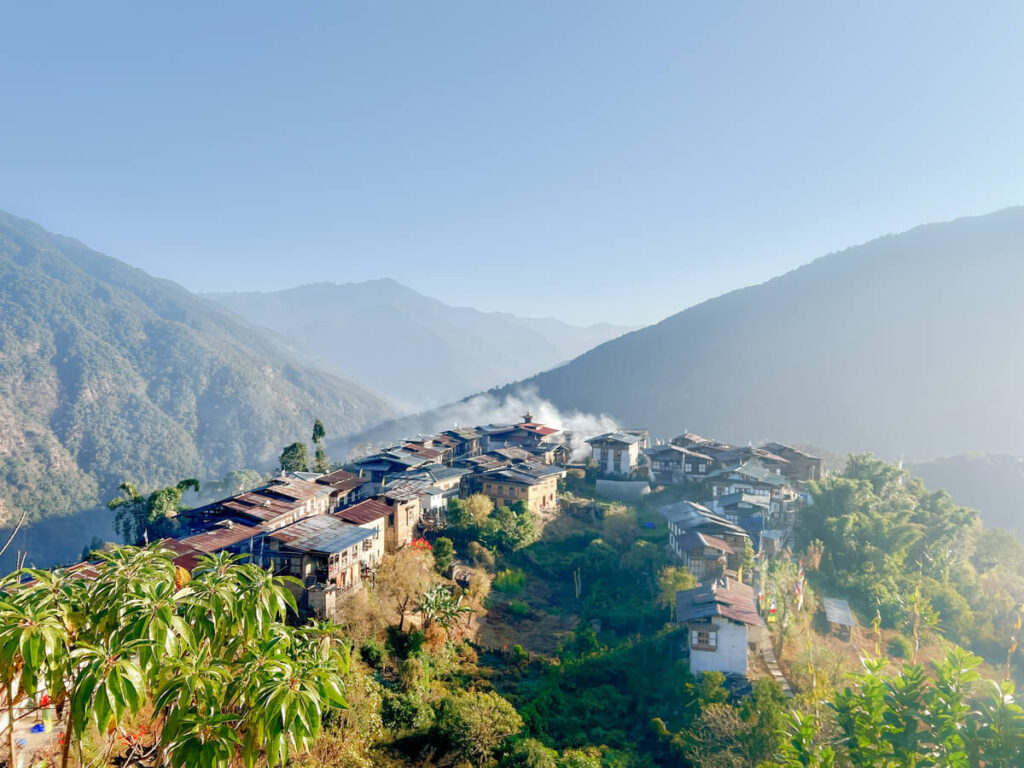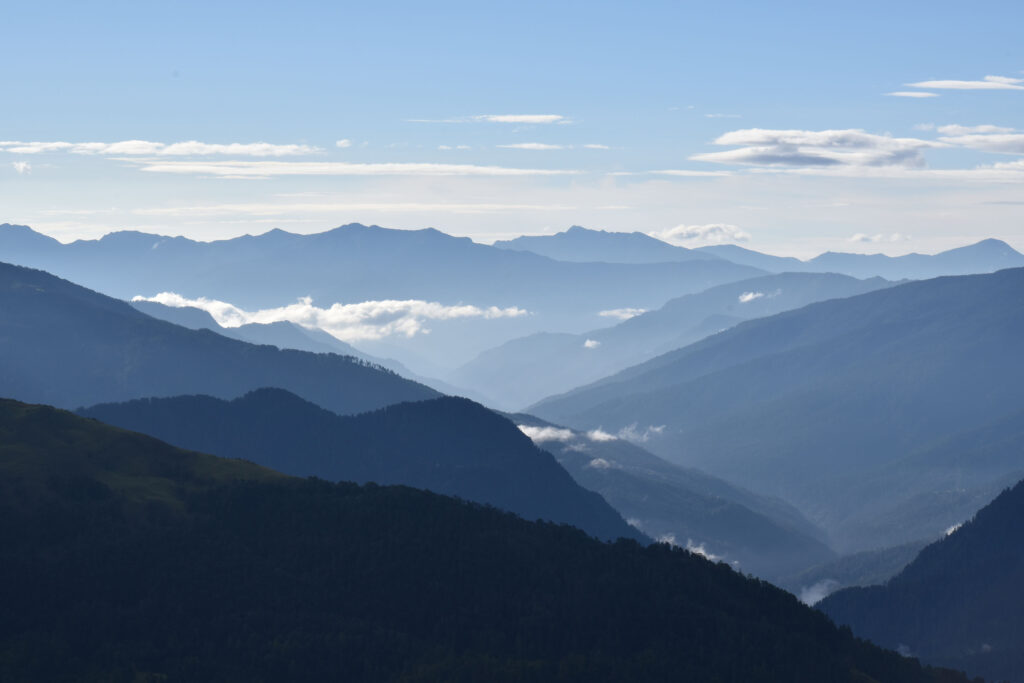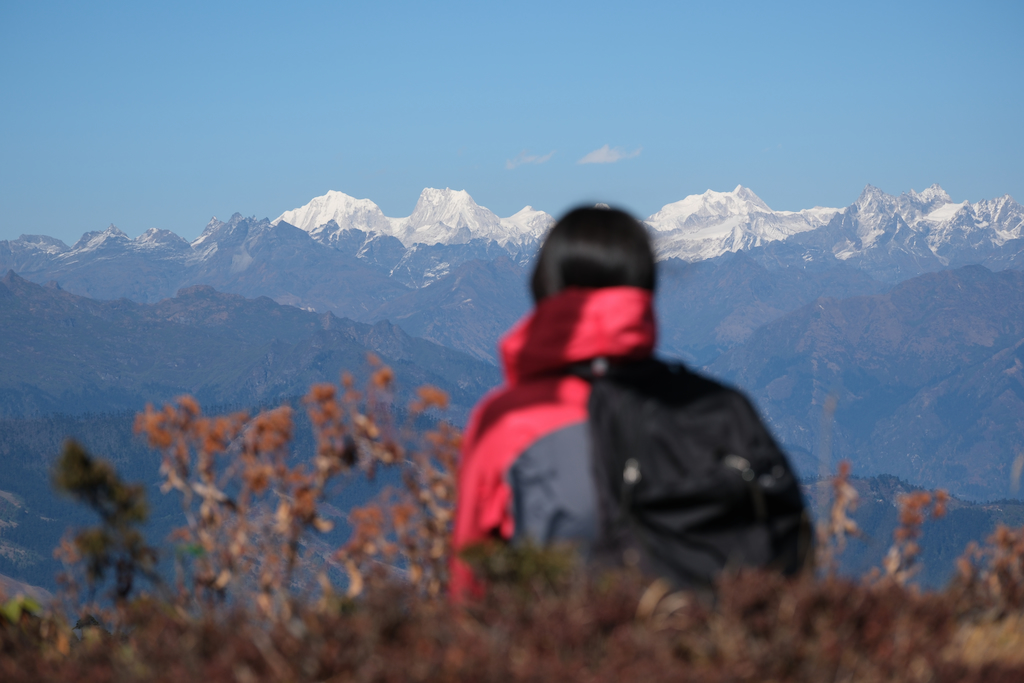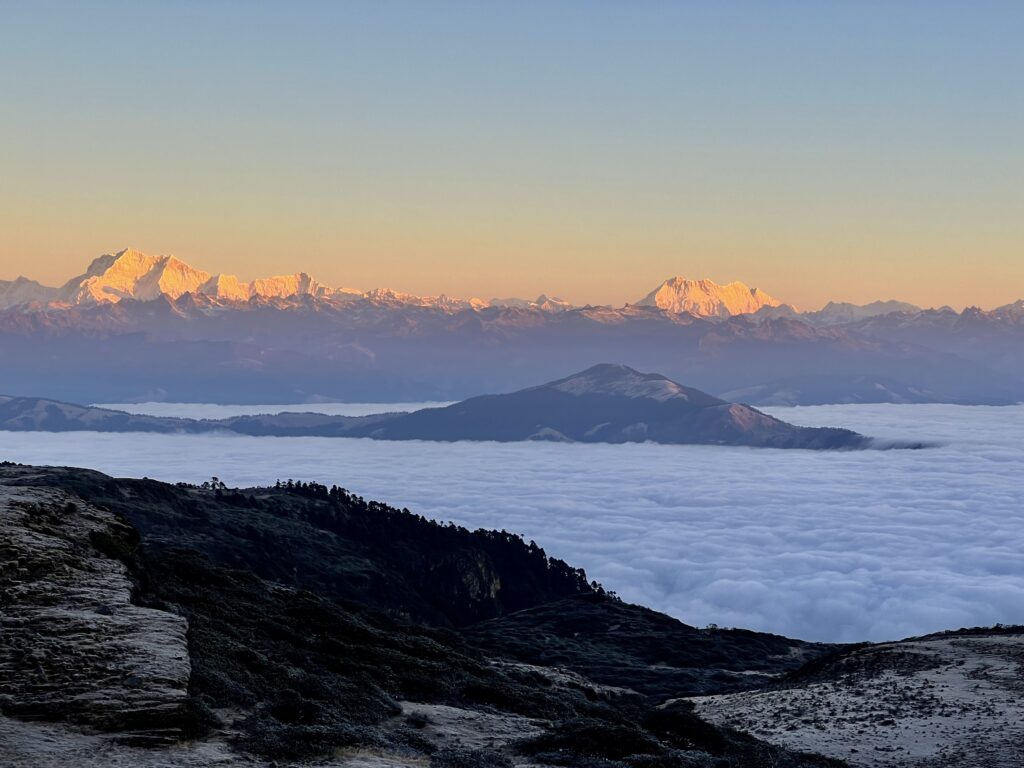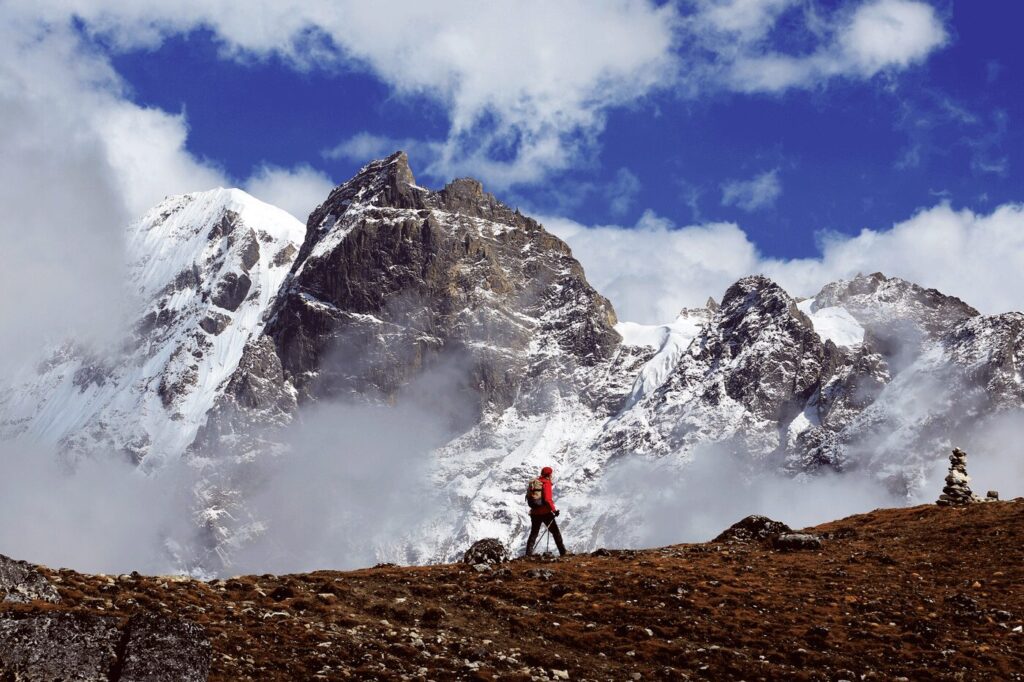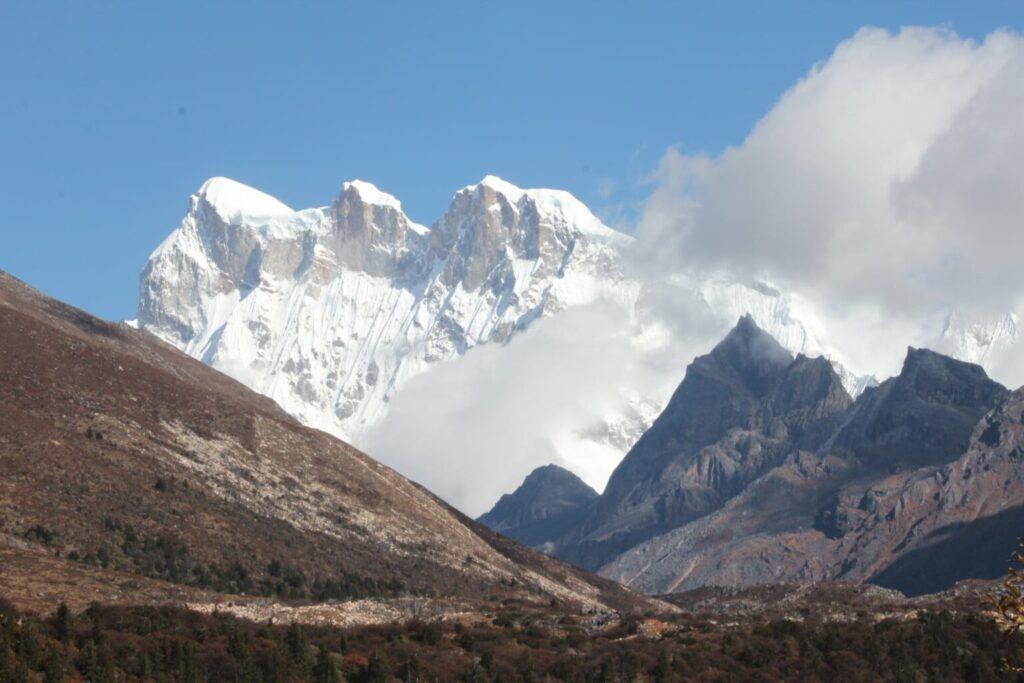



Sitting high up on the eastern ridges of the Himalaya, Bhutan is the dream destination for any trekker. Trekking in Bhutan is unlike anywhere else in the Himalaya.
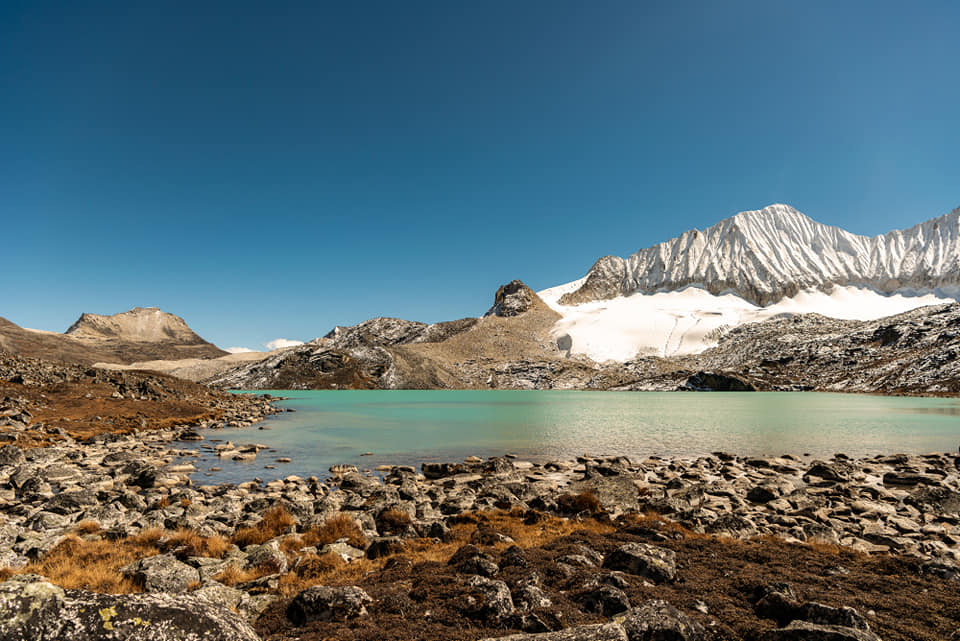
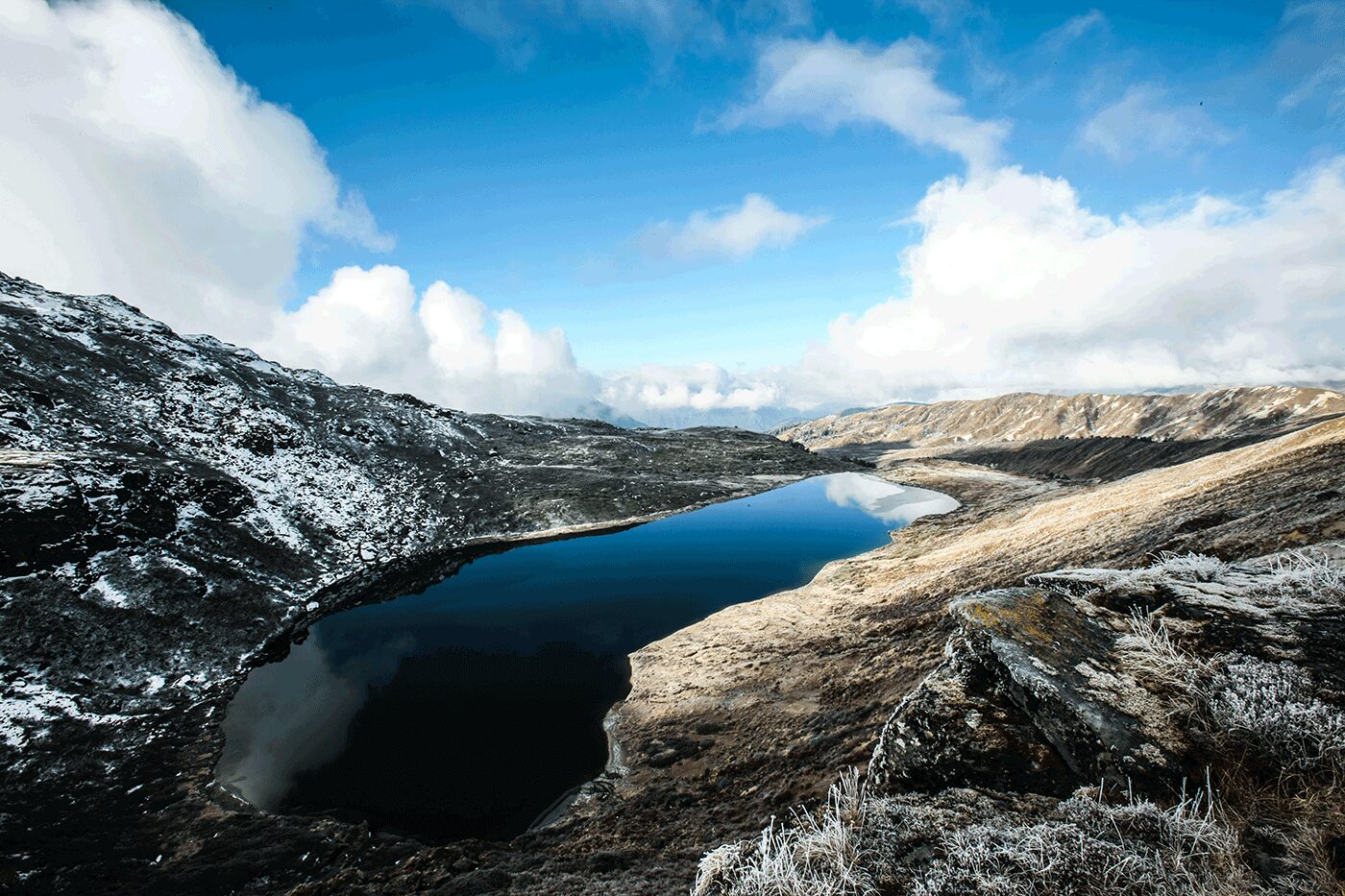
The trekking experience can offer you the most stunning landscape with mighty mountains and crystal clear lakes. You will cross picturesque valleys and rugged high passes and visit remote villages. With over 70% of forest cover, Bhutan is the only carbon-neutral country in the world until now. The kingdom has a rich flora and fauna level and there are some species that can only be seen residing up in the high mountains of the Himalaya, like the blue sheep, black-necked cranes, and takin (Bhutan’s national animal).
Besides the unspoiled nature, you will get to see some majestic and imposing dzongs and temples on the trail. These impressive structures have become of Bhutan and are the place of daily worship for the people.
When it comes to trekking in Bhutan, there are various types of treks that one can choose according to their fitness level. If you are a beginner, the Druk Path Trek is a pleasant trek to try out. On the other hand, experts can challenge themselves, taking on the Snowman Trek. Yet, the most important thing is to choose a suitable trip, so that you can fully enjoy the experience of walking and camping in the nature of Bhutan!
Tour duration: 9 nights / 10 days.
Trek duration: 6 days.
Tour destinations: Paro and Thimphu.
This 6-day trek will take you to see the pristine nature and crystal-clear lakes and pass the traditional villages of Thimphu. This is a moderate trek as you will be hiking and see the striking views of the whole Himalayan range and some of the world’s highest peaks like the Roof of the World – Mount Everest (8,849m) and Jomolhari peak (7,314m). The tranquil pictures of bird rich areas, alpine flowers and scenic meadows will make every moment on this trip worthy of your effort. The best time to embark on this trek is between mid-April to June and mid-September to November.
Day 01: Arrive in Paro
Before landing in Paro (altitude: 2,300m), you can catch the whole scene of this beautiful town from above. Our representative will welcome you at the airport.
After a rest, we will visit Paro Rinpung Dzong (Fortress of The Heap of Jewels) in the afternoon. Praised as one of the high points of Bhutanese architecture, the enormous dzong was the meeting hall for the National Assembly and on numerous occasions, was used to defend Paro valley from Tibet’s invasions.
Our next stop – the National Museum of Bhutan (Ta Dzong) was built in 1649 to protect Paro Dzong. It was then turned into the National Museum, holding valuable collections of Bhutan’s thangkas, festival masks for Tshechu dances, a 3D map of the country and the Heritage Gallery.
The late afternoon is designed for an explorative walk around Paro’s main streets and market, and we will stay overnight at the hotel.
Day 02: Explore Paro valley
We will hike to one of the most holy sites in Bhutan – Taktsang Monastery, or Tiger’s Nest. This spectacular monastery perches on the edge of a cliff 3,120m above sea level. It is said that “If you have never been to Tiger Cave Temple, your trip to Bhutan is not complete”. This shows how important this landmark is to Bhutanese. Every Bhutanese is expected to complete the pilgrimage to Tiger’s Nest at least once in their life. We will be ascending about 900m, the trail is about 4,5km one way, and the whole hike will take 5-6 hours (for an average person). Along the way, we will also take multiple stops so you can enjoy the scenic view of Paro valley, ancient forest, and enormous mountains. The untouched nature is the reason why Bhutan is such a hotspot for trekkers and nature-lovers.
Next, we will head to one of the country’s oldest and most remarkable temples, Kyichu Lhakhang. It is believed to have been built by Tibet’s King Songtsen Gampo in 659, to pin down the left foot of a giant ogress who was obstructing the establishment of Buddhism in Tibet. The charm of this site is when one gets to catch a beautiful scene of elderly pilgrims spinning the temples’ prayer wheels.
We will stay at the hotel in Paro for another night.
Day 03: Gynekha -Gur
- Distance: 7km
- Estimated time: 5hrs
- Camp altitude: 3,290m
- Ascent: 550m, descent: 210m
In the morning, we will drive to Gynekha Village to start our trek. The trek begins at the lovely Gynekha village and descends toward the river. Crossing the river, we will be hiking up until reaching a huge rock platform. From here, you will have a striking view of the whole valley. Another 2 hours of trekking and Gur will welcome us. We will camp at this green area of yak pastures, located right below the main trail.
Day 04: Gur – Labatama
- Distance: 12km
- Estimated time: 5-6hrs
- Camp altitude: 4,300m
- Ascent: 1,220m, descent: 110m
Today the trek will be more challenging as we need to cross high ridges to see the rugged beauty of the whole region and the mountain vegetation. The trail is adorned with wild flowers, and after the first mountain pass, we will be able to enjoy the magnificent view of Kanjenjunga (Sikkim) and some other Bhutanese Himalayan peaks. Upon descending toward Labatama, we will even see the entire Dagala mountain range, with several yak herder huts on the way. Your campsite is next to Uthso Tsho Lake.
Day 05: Rest day at Labatama
Our fifth day is designed for you to truly relax in Labatama and to take your Bhutan holiday at a slower pace. It is also ideal to take an excursion to any of three nearby lakes: Reli Tsho, Hen Tsho and Jama Tsho.
Day 06: Labatama – Panka
- Distance: 8km
- Estimated time: 6-7hrs
- Camp altitude: 4,000m
- Ascent: 260m, descent: 520m
Today is the highlight of our trip, as we will take you to see some of the world’s highest mountain peaks, including Mt. Everest (Nepal), Mt. Kanjenjunga (Sikkim), Mt. Jomolhari, Mt. Jitchu Drake, Mt. Tshering Gang, Mt. Khangbum, Mt. Masang Gang, Mt. Tsende Gang and Mt. Gangche Ta. You can hike a peak close to the saddle for a better view. Our path will then descend through Dala Tsho and follow the Doccha Chuhu to reach Panka.
Day 07: Panka – Tsheregang
- Distance: 8km
- Estimated time: 5-6hrs
- Camp altitude: 3,080m
- Ascent: 180m, descent: 110m
The treks we will be doing for today are quite easy with crossing several passes. Along the path, you can explore Bhutan’s diverse nature, catching sights of blue poppies – Bhutan’s national flower and also colourful mountain birds. After crossing the last pass, Tale La (4,180m), it is a long descent to Talakha Gompa Monastery. Your campsite is next to the quaint monastery, from where we can have a great view of Bhutan’s capital Thimphu.
Day 08: Tsheregang –Chamgang
- Distance: 6km
- Estimated time: 3hrs
- Descent: 440m
From our campsite, simply enjoy our short walk to Chamgang village, where our car will wait to take us to the hotel in Thimphu.
We will visit Tashichho Dzong (Fortress of The Glorious Religion) in the late afternoon. The dzong is chosen as a symbol of Thimphu, and it has been the seat of Bhutan Government since 1952.
Afterwards, we can walk around to see more of Thimphu. The charming capital is a must-visit destination for it is where the culture of Bhutan and modernization are shown, making it ideal for you to fully immerse in the contemporary Bhutanese lifestyle.
Day 09: Thimphu to Paro
The day is packed with visits to numerous interesting and well-known destinations!
Your first stop is the National Memorial Chorten. This holy site was built as a memorial to Bhutan’s Third King, His Majesty Jigme Dorji Wangchuck as well as a monument to world peace and prosperity. You will catch the sight of locals circumambulating, reading mantras in murmur and spinning their prayer wheels at the chorten throughout the day.
Next, let’s learn about the production of Bhutanese traditional paper at Jungshi Handmade Paper Factory. This special paper is handmade from Daphne and Dhekap trees and used for woodblock and manuscript books and writing prayer books.
Then we will arrive at the National Insitute for Zorig Chusum, or The Arts and Craft School/ The Painting School. Here they operate four to six-year sources, teaching thirteen traditional arts of Bhutan. Students can be seen creating thangkas, doing embroidery or clay arts or wood-carving.
Our next destination is Buddha Point (Buddha Dordenma Statue)– a giant 51,5m statue of Shakyamuni Buddha. It is the largest statue in the country. Placed inside the massive statue are 125,000 smaller Buddha statues, cast in bronze and gilded.
After lunch, we will drive back to Paro and stay there overnight. The evening can be spent exploring cool local pubs or simply strolling through bustling streets of Paro at night.
We will stay overnight in Paro for the last night.
Day 10: Depart Paro
After an early breakfast at your hotel, your guide will accompany you to the airport to your onward destination. It is time to say “Tashi Delek” (Goodbye and Goodluck) and hope to see you again in Bhutan!
Inclusions:
A Bhutan visa fee.
3-star and 4-star hotels on our hotel list.
A private car with an experienced driver throughout the trip.
Three meals (breakfast, lunch, and dinner) in a day.
Bottled water is provided on non-trekking days, while boiled water is available for refilling reusable bottles on trekking days.
A sustainable development fee of US$ 100 per person per night.
A 5% Goods and Services Tax (GST) on tour package.
Museum fees, all park entrance fees, and trekking permits.
Sightseeing as per itinerary with a qualified and licensed English-speaking guide on non-trekking days.
An experienced and licensed English speaking trekking guide, cook, helpers, horses, and horseman on trekking days.
Trekking equipment: sleeping tent (full carpet, thin foam mattress with a bedsheet, foam pillow, and one small blanket); shower tent (soap, towel, and warm water); kitchen tent; dining tent; toilet tent (toilet pot and paper); sleeping bag; accommodation in twin sharing tent.
Horses to carry 25 kg personal belongings.
A shared group medical kit.
Gho or Kira (traditional and national dress of Bhutan) for your use during your stay in Bhutan.
Physical Bhutan sim card.
Archery (Archery is the national and most popular sport in Bhutan. There are traditional bows and arrows available in case you want to try this sport. Your guide and driver will be very happy to show you the basics of playing it).
A traditional hot stone bath at a farm house.
Exclusions:
Laundry, beverages, telephone calls, and any personal expenses.
Travel insurance.
Airfares.
Airport taxes if any.
Excess baggage charge.
Tips for a trekking team and driver.
Services not mentioned.