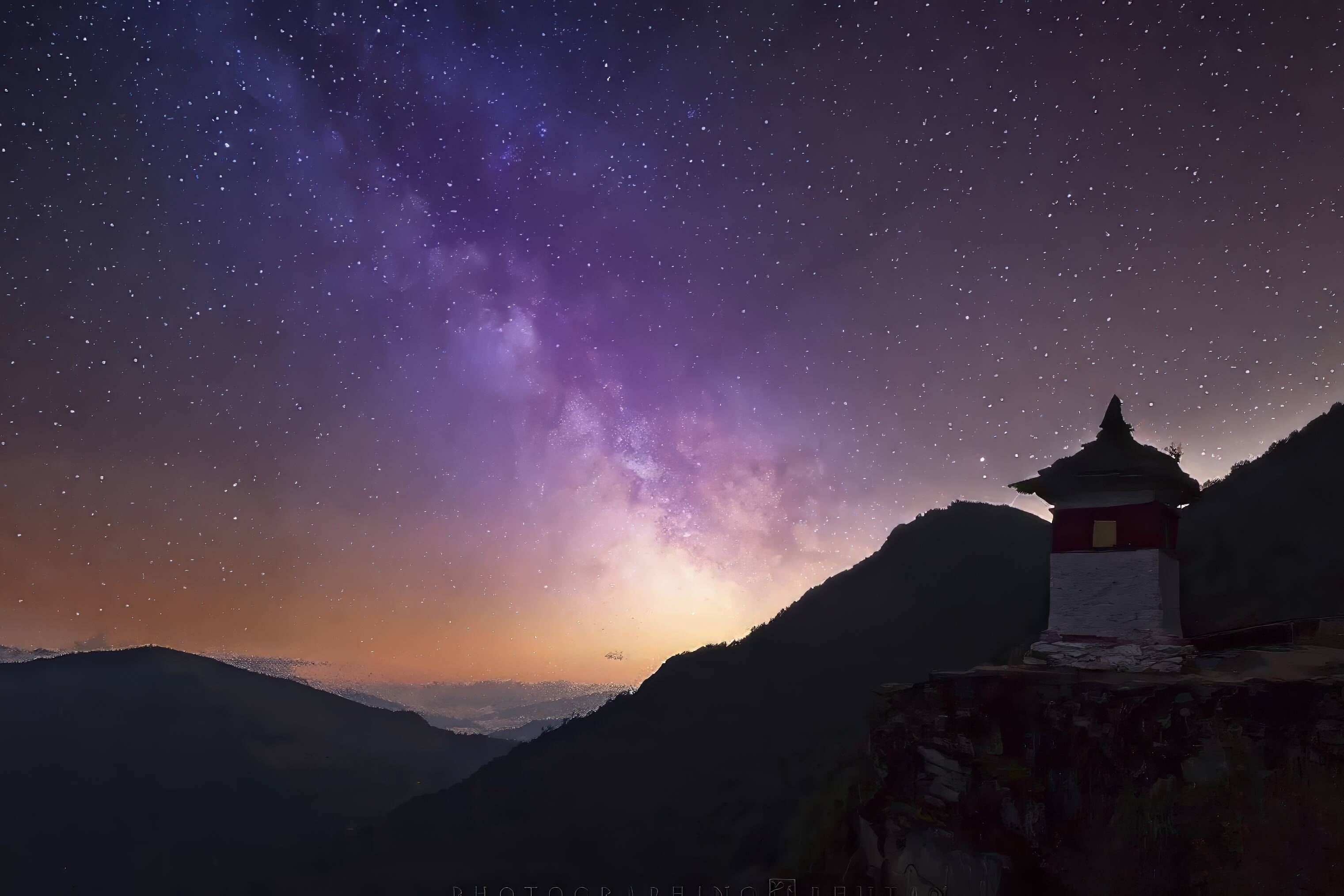

Being famous for its pristine nature, Bhutan will amaze you with beautiful landscapes and its diverse wildlife. The kingdom is recognized globally as a hotspot for biodiversity and as the only carbon-negative country in the world. There are five National Parks, four Wildlife Sanctuaries, one Strict Nature Reserve, eight Biological Corridors and one Botanical Park located across the whole country. The protected area complex covers 51.44% of Bhutan with 19,750.57 sq.km of land and total forest coverage 71%. Coming to Bhutan, you will have the chance to visit some of these areas in your trip. Sometimes you may not even recognize that you have stepped into a national park.
1. Jigme Dorji National Park
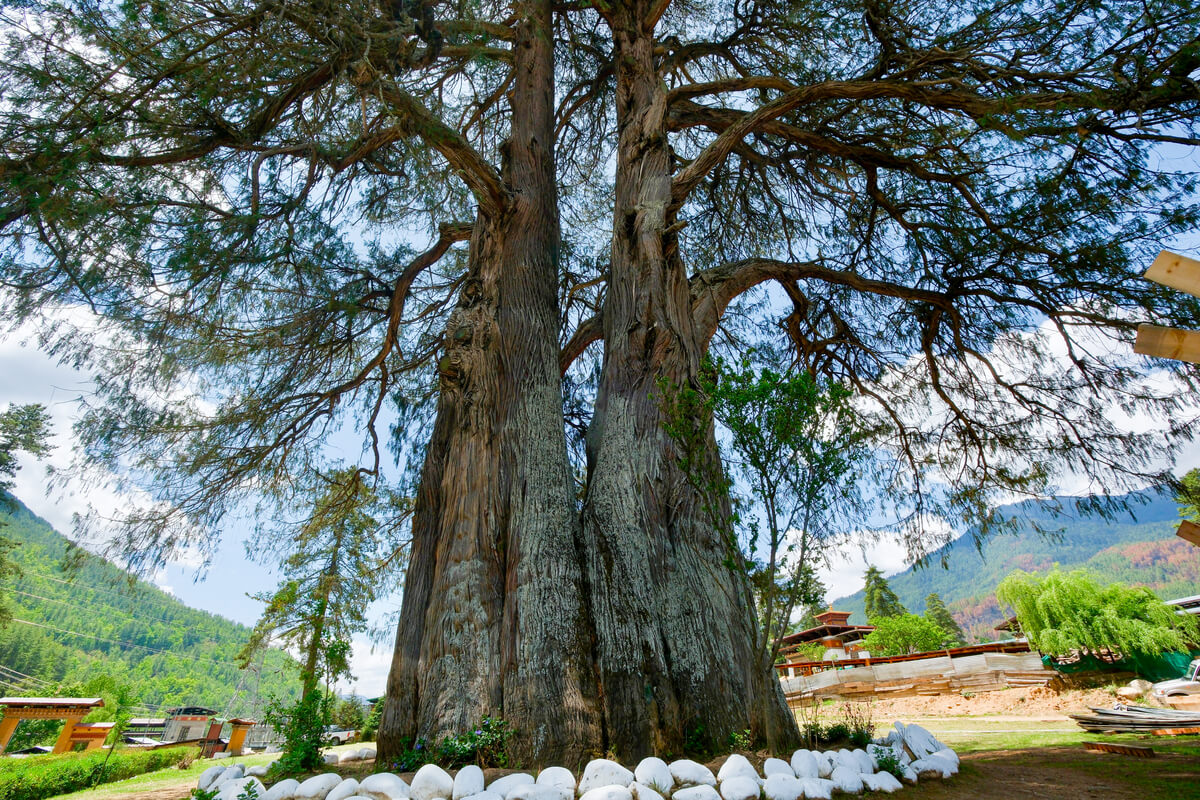
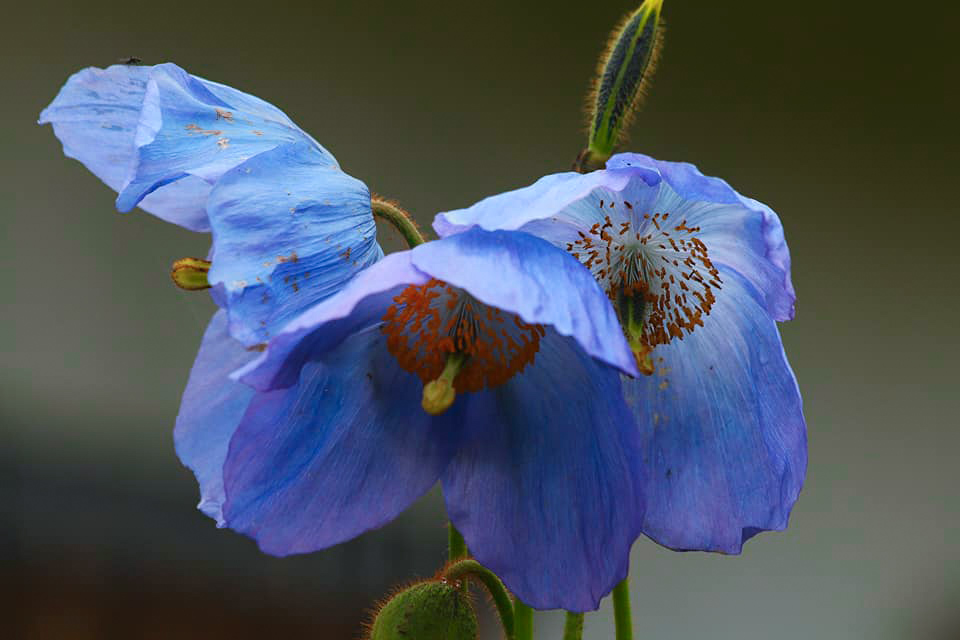
Jigme Dorji National Park (JDNP) is the second biggest and one of the oldest National Parks of Bhutan. It was established in 1974 in the north-western part of the kingdom and covers Punakha, Gasa, Thimphu and Paro districts with approximately 4,316 sq.km. The classic Laya-Gasa Trek winds through its heart. JDNP is home to a great number of scarce animals like tigers, snow leopards, musk deer, and Asiatic wild dog. And there is no other park in the world that sees the Royal Bengal Tiger (Panthera tigris tigris) meets the Snow leopard (Uncia uncia) as their habitats overlap. The recorded figures of takin – Bhutan’s national animal in JDNP is the highest in the country. And it gets even better as takin will not be the only symbol of Bhutan that you can observe here; raven, blue poppy and cypress all reside in the area, they are the kingdom’s national bird, national flower and national tree, respectively. Furthermore, over 36 mammals, 5 reptiles, 39 butterflies, 328 birds, and 1,450 vascular plants are residing in the region, some of which are only seen here, and there are many more to be discovered. The diversity and appearance of endangered animals and plants and breath-taking sceneries at JDNP make it a conservation jewel of the Himalayas. Because of the large covered area, there are several major ecosystems existing inside the park: warm broadleaf forest, cool broadleaf forest, mixed coniferous forest, and alpine meadows (rangelands).
Majestic mountain peaks, such as Jhomolhari, Masangang, Jichudrakey, Tsherimgang, and Gangarpuentsum, Ganchentag, Ganglakarchung are encompassed by the park, turning it into ‘the trekker’s paradise’. At Bhutan Pelyab Tours, we have three treks that will come through JDNP during the trip – Jomolhari trek, Laya Gasa trek, Snowman trek. Jomolhari trek is the most popular trek in Bhutan, which provides you with the splendid view of Mount Jomolhari from Jomolhari Basecamp. Laya Gasa and Snowman treks are the two most difficult treks in Bhutan, but they give you the most spectacular scenes. The stunning sceneries rendered by serene alpine meadows adorned with beautiful flowers, majestic Himalayan mountain peaks, alpine lakes of varied colors, herds of blue sheep and yaks, cascading rivers and waterfalls, and the verdant forests covered in clouds and mist are something that come straight out from one’s dream. You can also listen to the joyful songs of the alpine yak herders as they sing cheerfully to the visitors. The reward waiting for you after an exhausting trip is a bath in the natural hot springs; the hot water will ease your body and mind. Trekking in JDNP is one of the remarkable memories of Bhutan that you will keep for life.
2. Royal Manas National Park
Being established in 1964, Royal Manas National Park (RMNP) is the oldest and 4th largest national park in Bhutan. It is in the south-central part of the country and spans over 1,057 sq.km, taking in Sarpang and Zhemgang districts. RMNP shares boundaries with four other national parks and sanctuaries of Bhutan, which explains why it is the cornerstone in the protected area network of the country. Many rare species choose this area as their home: Royal Bengal Tiger (Panthera tigris tigris), Indian Rhinoceros (Rhinoceros unicornis), Pygmy hog (Sus Salvanius), Asian Elephant (Elephas maximus), Asiatic water buffalo (Bubalus bubalis). Royal Manas National Park is famous as a birdlife paradise in whole of the Asia with an exceptionally high diversity of avifauna as the record in 2016 was 430 species. The wide range of habitats and dense forests of RMNP have provided home to the dense population of birds. The national park is also home to globally rare and endangered floral species such as Dalbergia oleveri, Aquilaria malaccensis and Taxus baccata and Podocarpus neriifolia – the only conifer broadleaved tree found rarely distributed in the park area. Also, over ten thousand of insects are recorded to be living in RMNP.
The park has four diverse habitats from tropical monsoon forests, subtropical forests to warm broadleaved forests and cool broadleaved forests. The Manas River flows alongside the area and this is where the name Royal Manas comes from. The river forms the lifeline of RMNP, providing a large track of highly significant watershed area. The dense towering mountains punctuate with rivers and small streams, long strips of grasslands and wide river-beds paints a uniquely stunning picture of the park.
The Royal Manas trek will take you across this unspoiled land to immerse in the beautiful nature of Bhutan. Tourists will also experience the local life, culture, and hot stone bath at the five community-managed eco-camps. Wildlife viewing and birding are some of the excitements that our visitor do not wish to miss. Elephant safari and rafting are offered on demand by visitors.
3. Jigme Singye Wangchuck National Park
Jigme Singye Wangchuck National Park (JSWNP) is opened since 1995, as the 3rd largest Protected Area in Bhutan. It spreads over 1,730 sq.km and five districts partially. The ecological biomes range from sub-tropical to alpine meadow. The park’s missions are to converse the natural life of Central Bhutan with diverse and rich fauna and flora, representing the ecosystem of middle Himalayas and to protect cultural, historical and religious sites. There are six major ecological zones exist in JSWNP: subtropical broadleaf forests, chir pine forests, warm and cool temperate broadleaf forests, subalpine conifer forests, and alpine scrub and meadows.
The recorded data have showed the presence of 39 mammals, 270 birds, 139 species of butterflies, 16 fishes in the park, and we have yet to establish the baseline for herpeto fauna, fungal diversity and of orchids and herbal plants. Of 270 recorded bird species, ten are Globally Threatened, and are of conservation interest and four falls under Schedule 1 of FNCA 1995. Phobjikha valley, in the buffer zone is also the wintering habitat for a population of about 260 Black-necked cranes, representing about 6% of the global population of this endangered species. Birds of conservation importance are Monal Pheasant, Satyr Tragopan, Rufous necked Hornbill and White-bellied Heron. Amongst the mammals, twelve species are listed in Bhutan‘s FNCA 1995. Animals of conservation importance include Tiger, Leopard, Clouded leopard, Himalayan Black beer, Musk Deer, Red Panda and Golden langur. Over 5,000 species of vascular plants are expected in JSWNP but the Rapid Biodiversity Survey (2012) conducted in various randomized plots confirmed the presence of 441 species of plants. Of these, 78 are tree species belonging to 32 different families, 149 shrub species and 214 herb species.
There are two treks that go through JSWNP – Nabji-Korphu trek and Adha-Rukha trek. Nabji-Korphu is an easy trek that takes you around picturesque Trongsa Dzongkhag with nights spent in the villages of Nabji, Korphu and Nyimshong. Adha-Rukha is a newly developed trail, connecting two main villages of Adha and Rukha. Villagers here are amicable and warm to the guests staying overnight at their homes. The majority of people residing in the national park are Monpas and their descendants. The small group of “Oleps”, who are believed to be the original Bhutanese with the distinct culture is almost at the verge of extinction, resides in Athang geog under Wangduephodrang Dzongkhag. Similar group of people “the Monpa”, whose culture is also vulnerable, exists in Langthel geog (Trongsa), Berti in Trong Geog (Zhemgang) and Reti in Jigmecholing geog.
4. Phrumsengla National Park
Phrumsengla National Park (PNP) was established in 1998 with 905.05 sq.km – the smallest area in the total five national parks. The park covers Bumthang, Lhuentse, Mongar and Zhemgang. The vegetation here varies from subtropical broadleaf to alpine grassland. It is home of over 623 plants species and 71 mammals species. More than 623 plants species have been seen in Phrumsengla National Park, with 152 medicinal plants and 21 species endemic to Bhutan. Rhododendrons flowers add beauty to pristine fir forests at the higher elevation. Phrumsengla National Park is known as one of the best destinations for bird-watching in the whole Asia. A record of 361 bird species includes globally threatened Rufous-necked Hornbill, Beautiful Nuthatch, Pallas’s Fish Eagle, Chestnut-breasted Partridge and other kinds like Yellow-rumped Honeyguide, Ward’s Tragon, Tawny Fish Owl. Tourists flock to the national park every year for bird-watching.
On a clear day, try taking in the view of Bhutan’s highest Peak Gangkar Phuensum from Phrumsengla Pass on the highway. PNP is your ideal destination for bird-watching, mushroom hunting, visiting the Rhododendron Garden at Phrumsengla top or taking a hot stone bath at the camp site.
5. Wangchuck Centennial National Park
Spanning over 4,914 sq.km, Wangchuck Centennial National Park (WCNP) is the largest national park of Bhutan, set up in 2008. It is located in the central north part of the kingdom and covers Gasa, Wangdue, Bumthang, Trongsa, and Lhuentse districts.
The park is the most important high-water towers feeding four major rivers in Bhutan, namely Punatsangchhu (Sunkosh), Mangdechhu, Chamkharchhu and Kuri chhu, encompassing a great extent of critical watershed of the country. Located in the park are permanent snow covered mountains – Gangkar Puensum, Rinchen Zoegila and Jazayla. In the winter, 85% of the area remains under snow cover and this usually lasts for four months.
6. Sakteng Wildlife Sanctuary
Sakteng Wildlife Sanctuary has the 2nd largest area (740.60 sq.km) out of the four sanctuaries, spreading over Trashigang and Samdrupjongkhar. The sanctuary harbors eight different forest types, ascending from warm broadleaved to alpine meadow and majority of the area falls in temperate zone. The sanctuary harbors an extremely wide range of plants, especially Rhododendron species, birds and animals like snow leopard, red panda, Himalayan black bear. Out of the total 46 species of Rhododendrons Bhutan, 35 species of Rhododendrons can be found in the sanctuary. The region is commonly acknowledged as the “Paradise of Rhododendrons” in the country, similar to the Garden of Eden in the west. And not only animals and plants, even Yeti – the mystical creature is believed to live in this area. Yeti are believed to be 8 feet tall (2.5m), walk backwards and can make themselves invisible.
Merak Sakteng Trek is a nice trail for those who desire to discover the Bhutan local life, as the valley between Sakteng and Merak is home of the Brokpas. There are about 5000 semi-nomad inhabitants (Brokpa) of Merak and Sakteng are living across the jurisdiction The Brokpas women are known for their love for singing and they also have an autumn festival.
7. Bumdeling Wildlife Sanctuary
Proudly recorded as the largest sanctuary of Bhutan, Bumdeling Wildlife Sanctuary has opened since 1994, spanning over Trashiyangtse, Lhuentse and Mongar districts, 1,520.61 sq.km in total. It is in the north-eastern of the country, with an impressively wide range of ecosystems – from warm cool broadleaved forest to Alpine meadows and scree slopes. Bumdeling is home to a significantly diverse wildlife, inlcuding some vulnerable species like Royal Bengal Tiger, Snow Leopard, Red Panda, Himalayan Musk Deer, Rufous-necked Hornbill, Chestnut-breasted Partridge, Wood Snipe and Palla’s Fish Eagle. Moreover, the only endemic butterfly in Bhutan and in the world – the Ludlow’s Bhutan Swallowtail is located in the Sanctuary.
The Sanctuary is the catchments of the mighty Drangme Chu, one of the biggest rivers of the kingdom and the Kholong Chu, which forms the living habitat for the endangered Black-necked Crane in Bumdeling valley. There are two small groups of yak-herders who stay in the northern parts of Bumdeling Sanctuary. Communities income is from producing Dapa (wooden bowl), Desho (handmade paper), Thangka (Buddhist Painted scrolls) and bamboo belts for weaving bamboo mats. Cultural religious sites – Singye Dzong, Risumgonpa, Pamaling, Dechenphodrang, Gonpa Karp, Lhakhang karp and Sangay Lodrou are all placed in this sanctuary.
8. Phibsoo Wildlife Sanctuary
Phibsoo Wildlife Sanctuary is the only natural habitat of spotted deer (Chital) and wild sal and agar wood forest in Bhutan, despite of its small area of only 268.93 sq.km. The sanctuary encompasses the two districts Sarpang and Dagana. Originally opened in 1974 as a Reserved Forest, the sanctuary got upgraded in 1993. Several other protected species that can be observed in the sanctuary are elephants, gaurs, tigers, golden langurs and honrbills. The jurisdiction has over 300 acres of unspoiled subtropical rangeland, which is potential prime habitat of pygmy hog and hispid hare. Approximately 637 kinds of flowering plants, 28 species of mammals and 132 species of birds have been discovered, and still there are chances of increasing the numbers of flora and fauna over time.
9. Jomotshangkha Wildlife Sanctuary
Jomotshangkha Wildlife Sanctuary has opened since 1993, with an area of 334.73 sq.km in the southeastern part of Bhutan under Samdrup Jongkhar district. The sanctuary covers the administrative blocks of Phuntshothang, Pemathang, Samrang, Langchenphug, and Serthig. The area is made up of Sub-tropical Forest, Cool Broadleaved Forest, Warm Broadleaved forest and few grassland along the southern fringes. It is known as the habitat of some of the most threatened species like Pygmy Hog and Hispid Hare. Not only that, the sanctuary is home to other important wild animals such as Asiatic Elephant, Common Leopard, Himalayan Black Bear and four different types of Hornbills.
10. Jigme Khesar Strict Nature Reserve
Jigme Khesar Strict Nature Reserve is the only strict nature reserve among the protected area in Bhutan. This area of 609.51 sq.km trans-boundary is located in the northwest region of the country. The park mostly lies mostly in Haa Dzongkhag with a very small spreading south into Samtse Dzongkhag. The park has changed its name in 2014 to honor the great contribution of the Fifth King of Bhutan – King Jigme Khesar Namgyel Wangchuk.
There are no permanent human settlements inside this reserve, except for a few migratory Yak herding communities. Thus, it is the most pristine temperate and alpine ecosystems in the whole country and maybe even in the Himalayas. Snow Leopard, Red Panda, Tibetan Snowcock and Rufous Necked Hornbills choose their home in this region. Also, the Reserve is the sole area that has the White Poppy (Meconopsissuperba) in Bhutan.
11. Biological Corridors
The biological corridors’ total area is exceedingly large 3,307.14 sq.km. There were initially 12 biological corridors connecting all nine of Bhutan’s protected areas. Following the establishment of Wangchuck Centennial National Park in 2008, three corridors were then added in. These biological corridors are bestowed as the Gift of the Earth to the country.
The corridors are the strong statement of vision for Bhutan, as the government are concerned and consistent with their goal of preserving the kingdom’s pure nature, landscape and atmosphere. These corridors are created to serve the goal of conserving living habitats for an extensive range of species and allowing them to adapt to climate changes.
12. Royal Botanical Park, Lamperi
The Royal Botanical Park, Lamperi in Punakha is the first botanical park in Bhutan. It was established in June 2008. The park is 47 sq.km, consists of cool broad leaf forests, mixed conifer forests, fir and sub-alpine forests and the temperate rain forest. The botanical garden of the park has within its limits the 108 chortens at the Dochula Pass. There are 46 different species of rhododendrons are planted in the garden. Hence, a rhododendron festival takes place at this botanical park every year as the flowers bloom during mid-March to early August, turning the whole park into a party of colours.
Want to experience Bhutan’s pristine wilderness first-hand? Discover our Bhutan Hiking Adventure tour.
Many of these protected areas are crossed by the country’s classic routes — explore them in our guide to trekking in Bhutan.
Nature & Wildlife
Ready to Explore Bhutan?
Let us craft your perfect Bhutanese adventure
Plan Your Journey