
Gangtey Tshechu Festival Tour Sep 2023 – 7 nights 8 days
- Free shipping on all orders over $50
- 30 days easy returns
- All taxes and customs duties included
There are different ways to discover Bhutan – the Himalayan kingdom blessed with breathtaking landscape and a deeply rooted Buddhist heritage. You can see the appearance of Buddhism in every aspect of life. And one of the most enjoyable ways to genuinely experience the Bhutanese culture is to join in Bhutan’s most important festival – Tshechu.
Tshechus are held annually in dzongs, monasteries and temples throughout the country. For hundreds of years, the festivals have been the celebration to honour Guru Rinpoche (Guru Padmasambhava), the patron saint of Bhutan. While Tshechus will be on the ‘tenth day’ of the lunar calendar corresponding to Guru Rinpoche’s birthday, the month of celebration may vary from place to place and temple to temple.
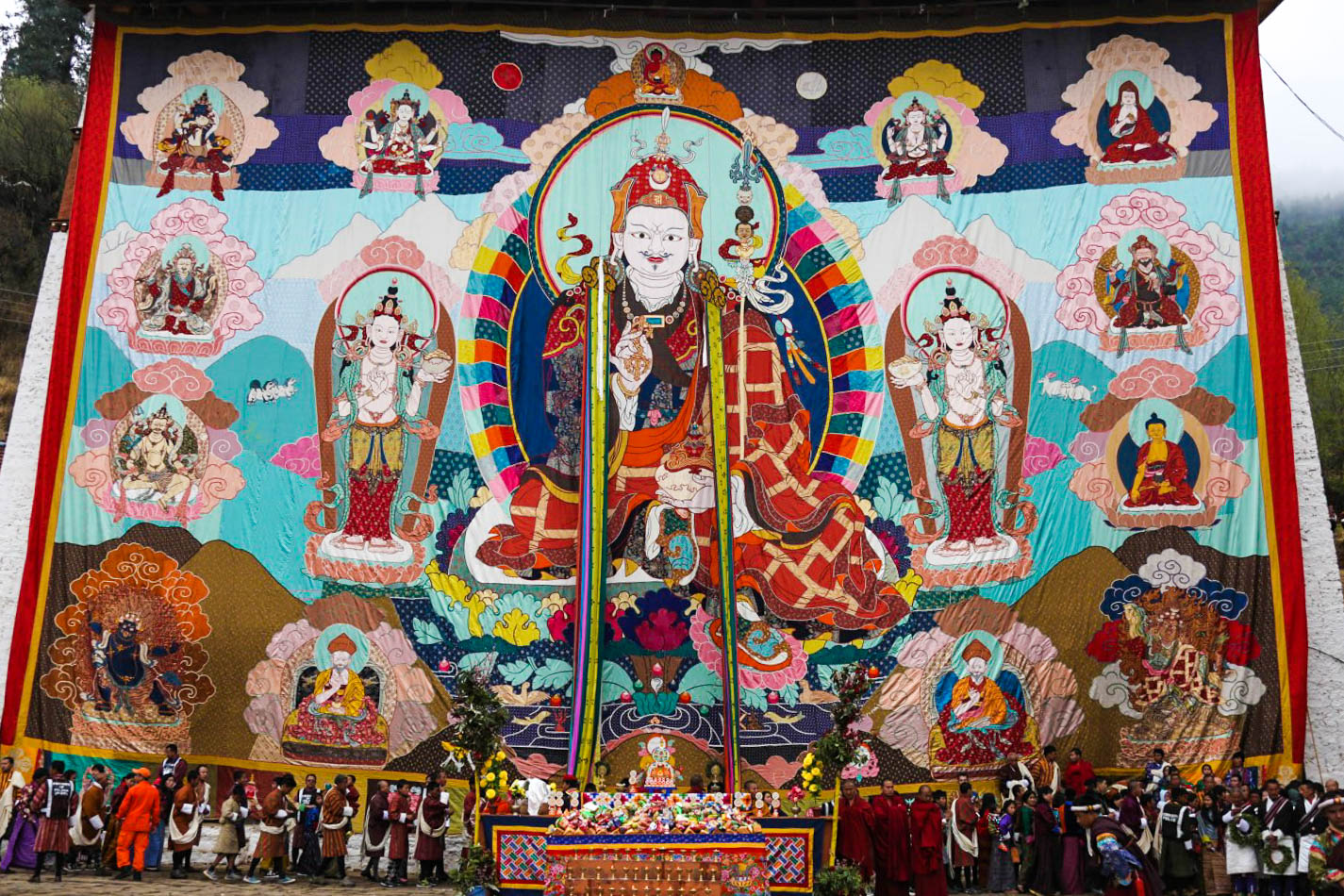
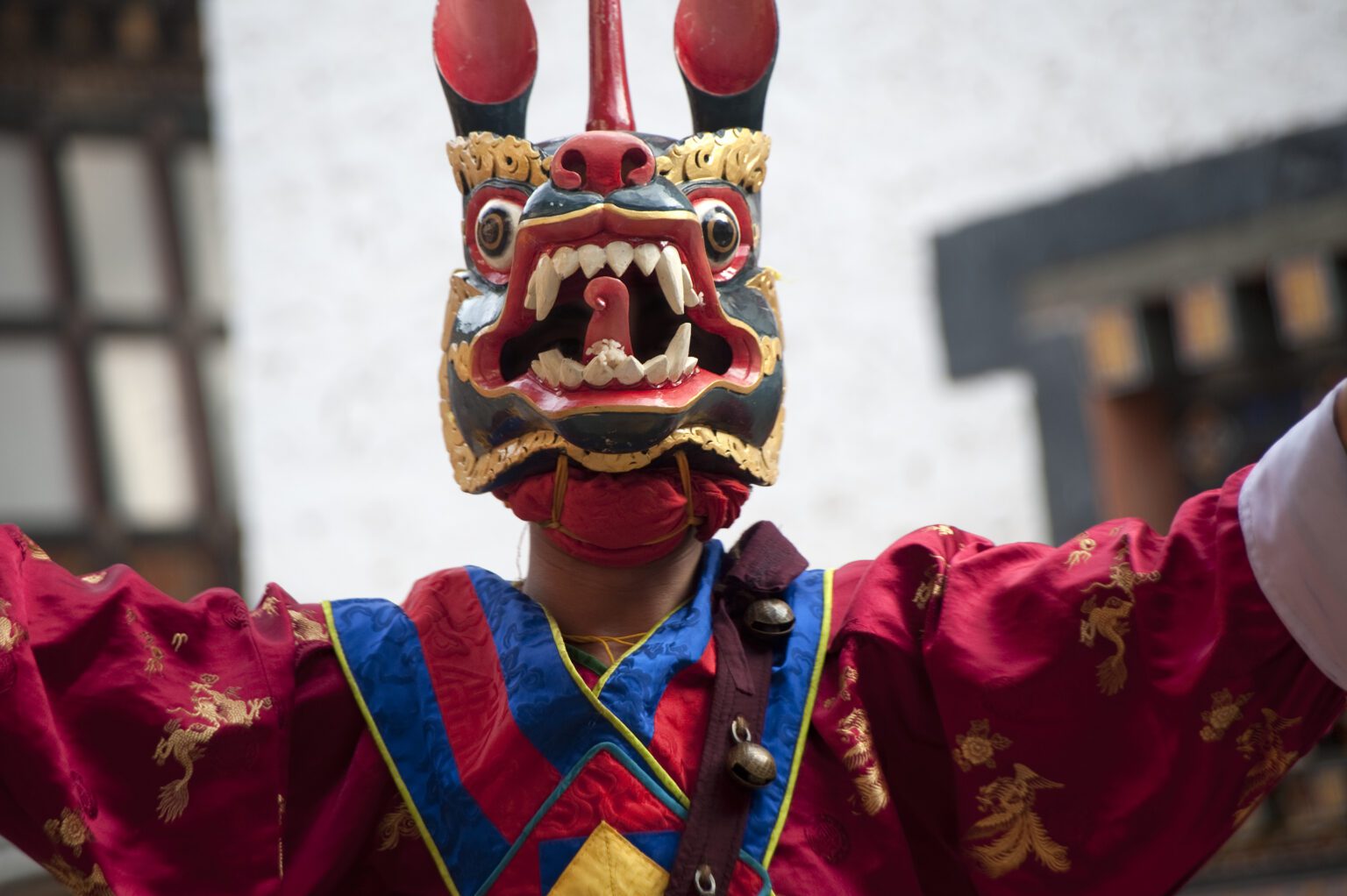
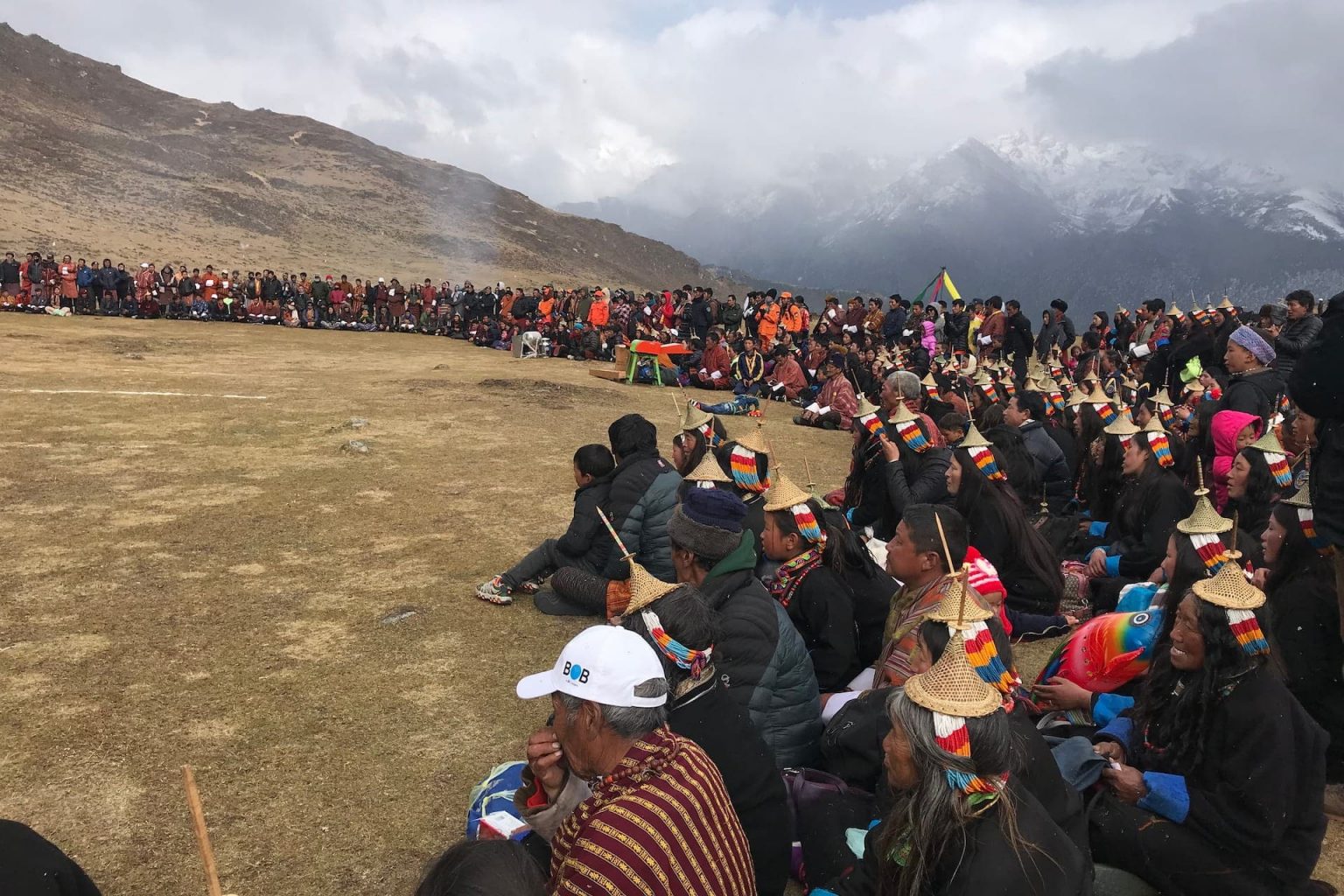
Tshechu are festivals of colours, music and dances. Dressed in ornate attire, monks will perform the mask dances to read out Buddhist scripts and tell stories from the 8th century, the time of Guru Rinpoche. Some Tshechus will also display a gigantic thangkha of Guru Rinpoche and other Buddhist gods. The festivals draw hundreds of Bhutanese people in a spirit of reverence, blessing, festivity and celebration. And not only Bhutanese, thousands of travelers also come to Bhutan to participate in Tshechus.
Tour duration: 7 nights/ 8 days.
Tour destinations: Thimphu, Gangtey, Punakha, and Paro.
Gangtey Tshechu Festival, held at Gangtey Goemba from the 13th to 15th of the eighth month in Bhutanese lunar calendar which falls from 27th September to 29th September 2023, is one of the biggest annual festivals of Bhutan. The Tshechu is held in honour of Guru Rinpoche (or Padmasambhawa), the great master who is credited with having introduced Buddhism throughout the Himalayas. There are many different performances taking place during the Tshechu, thus it is a brilliant time to experience Bhutanese culture in a unique way. Asides from joining the Tshechu, you will be able to explore the attractive destinations in Thimphu, the scenic landscape of Gangtey valley, and some of the most striking sites in Punakha and Paro.
Day 01: Arrive in Paro and travel to Thimphu
- Altitude in Paro: 2,300m
- Altitude in Thimphu: 2,400m
- Distance: 55km
- Estimated travel time: 1.30hrs
Welcome to Bhutan, the last Shangri La on Earth! Famed for its unrivaled landscape, Bhutan makes sure to impress any travelers from the first moment with the spectacular view of Himalayan snowcapped mountains from above. So, the first thing to do is to look out of the window as your plane approaches Paro airport to catch this view. Our representative will be there to warmly welcome you.
We will then drive to Thimphu – Bhutan’s capital. On the way, we will pay a visit to Tachogang Lhakhang (Temple of The Excellent Horse), an impressive temple erected by the famous Bhutanese bridge builder Thangtong Gyalpo (1385-1464).
The city of Thimphu itself is undeniably charming with a juxtaposition of historic landmarks and modern infrastructures. First, we will head to the National Memorial Chorten. The holy chorten is dedicated to world peace and prosperity, and later became a memorial to the Late King His Majesty Jigme Dorji Wangchuck. This is one of the most iconic structures of Thimphu.
Then we will visit Buddha Point (Buddha Dordenma Statue), the tallest statue in the country at a height of 51.5m. The remarkable statue, with the 125,000 smaller Buddha statues inside, emanates an aura of peace and happiness to the world.
The last attraction to see today is the astonishing Tashichho Dzong (Fortress of The Glorious Religion). The massive complex, first built in 1216 A.D, is located next to the banks of Wang Chhu River. The picture of the dzong standing next to Wang Chhu River is very eye-catching, especially with the lovely surrounding gardens. The sight of the flag changing at this place is also captivating, and you can catch it at 5pm!
In the late afternoon, we can see the vibrant life in Thimphu while walking around the main street Norzin Lam, where all kinds of items can be found, from souvenirs, woolen clothes to local alcohol. Thimphu’s nightclubs are also worth visiting for their great music and tasty snacks.
We will stay tonight at the hotel in Thimphu.
Day 02: Thimphu to Gangtey
- Altitude in Gangtey: 2,900m
- Distance: 160km
- Estimated travel time: 6hrs
From Thimphu, we will drive to Gangtey valley (or Phobijkha valley). We will stop at Dochula Pass at 3,050m, to enjoy the breathtaking mountain view it offers. You will be rewarded with wonderful panoramic views of the eastern Himalayan mountain ranges, with the chortens running along the hillside and the snowcapped mountain backdrop.
Once we reach Gangtey, we will follow the Gangtey Nature Trail to see the charming stunning landscape of the valley. Starting from the small hilltop overlooking Gangtey Goemba, we will descend to exquisite flower pastures and to Semchubara village. The trail will then pass through lush forest of blue pines to a valley viewpoint and finish at the small Khewang Lhakhang (Khewang temple).
Overnight at the hotel in Gangtey.
Day 03: Gangtey Tshechu Festival
Gangtey Tshechu Festival is held every year in the large courtyard of Gangtey Goemba monastery, on the hillock overlooking Phobjikha valley. The famous Tshechu is a religious ceremony held to honour Guru Rinpoche (or Padmasambhawa), the great master who is credited with having introduced Buddhism throughout the Himalayas.
There are a number of performances which take place during the Tshechu, from sacred mask dances (some unique to Gangtey) to folk singing dances. The Tshechu will be concluded with the Nguedup Langwa (the receiving of spiritual wisdom/power), a special blessing ritual for people who participate in the ceremony.
Gangtey Goemba, where the Tshechu is held annually, is a striking monastery built in 1613, following the prophecy of Pema Lingpa – the legendary 15th-century treasure finder. From the monastery, you will have the whole view of Gangtey valley, the winter home of the rare Black Necked Cranes.
We will stay tonight at the hotel in Gangtey
Day 04: Gangtey to Punakha
- Altitude in Punakha: 1,300m
- Distance: 87km
- Estimated travel time: 3hrs
After breakfast, we will spend the first half of the day continuing to join Gangtey Tshechu. You will be able to see different performances today. The atmosphere during the days of the Tshechu is always vibrant and filled with happiness.
We will go to Punakha after lunch, with sight en-route and stops for refreshments. Punakha is the old capital of Bhutan, a city of history, which has witnessed the most important moments of Bhutan’s history.
We will stay overnight at the hotel in Punakha.
Day 05: Punakha sightseeing
We will visit Sangchhen Dorji Lhuendrup Lhakhang Nunnery after breakfast. The striking temple is also a nunnery, sitting on a cliff overlooking the staggering valleys of Punakha and Wangduephodrang. The complex also consists of a permanent higher learning and meditation centre for the nuns.
Then we will explore the lavishing structure of Punakha Dzong (Palace of Great Happiness). It was built in 1637 as the second dzong erected in the country. The seat of Bhutan government was located here until early 1950s, and the wedding of the King Jigme Khesar Namgyel Wangchuck to Jetsun Pema was also held at the dzong.
Passing the dzong, we will see Pho Chhu suspension bridge – the longest of its kind in Bhutan. The 160m bridge is decorated with colourful prayer flags, and from the bridge, you will have the view of Punakha Dzong and the breathtaking landscape of Pho Chhu valley.
Later, we will hike through lovely rice fields and pine trees to Khamsum Yuelley Namgyal Chorten at an altitude of 1,500m. The short walk will only be about 1 hour. The chorten is well-known for its unique structure, and is one of the best examples of Bhutan’s architectural and artistic traditions. Erected by Her Majesty the Queen Mother, the chorten is dedicated to the wellbeing of the whole country as well as for the long life of our beloved King. Because of its location on the ridge, this is where you can have the best view of Punakha valley’s picturesque landscape.
We will stay overnight at the hotel in Punakha.
Day 06: Punakha to Paro
- Distance: 125km
- Estimated travel time: 4hrs
Today we will drive back to Paro. Along the way, we will visit Chimi Lhakhang (Temple of Fertility), which we can reach within 25 minutes, after a lovely walk across green hillock fields and farm lands of Lobesa Village. This temple is popular since childless women can go here to pray and to receive a wang (blessing or empowerment).
In the afternoon, we will have time to explore the massive complex of Paro Rinpung Dzong (Fortress of The Heap of Jewels). The great dzong was built in 1644 on the foundation of a monastery erected by Guru Rinpoche. The massive dzong with its towering white walls can actually be seen from anywhere in the town. Today the place houses both the monastic body and district government offices, including the local courts.
Afterwards, we will learn more about life in Bhutan by visiting the National Museum of Bhutan (or Ta Dzong). The building became the National Museum after the war, and it is now a favorite attraction for travelers. You will find here extensive collections, from thangkas, festival masks for Tshechu dances, to assortments of weapons and textile.
We will stay overnight at the hotel in Paro.
Day 07: Paro sightseeing
There is a local saying about the sacred Taktsang Monastery (or ‘Tiger’s Nest’): “If you have never been to Tiger Cave Temple, your trip to Bhutan is not complete.” The monastery is one of the holiest sites in Bhutan, and every Bhutanese is expected to complete a pilgrimage to the Tiger’s Nest once in their life. The walk to the temple is 4.5km one way, with an elevation gain of around 600m. Along the trail, we will stop for you to enjoy and take photos of the incredible landscape of Paro valley, with lush green forests and endless mountain ranges in the distance.
After the hike to the Tiger’s Nest, we will continue by visiting Kyichu Lhakhang – one of the country’s oldest and most prominent temples. It is one of the 108 temples built by the Tibetan King Songtsen Gampo in the 7th century, marking the introduction of Buddhism in the Himalayas. The sight of elderly pilgrims shuffling around the temple and spinning its prayer wheels makes this one of the most charming spots in the valley.
In the late afternoon, we will have a special dinner with a local family, in a traditional farm house. You will love spending time with the friendliest people, chatting over authentic Bhutanese dishes.
You will stay at the hotel in Paro for the last night of the trip.
Day 08: Depart Paro
After breakfast at the hotel, your guide will accompany you to the airport for flight to your onward destination. Tashi Delek (goodbye and good luck) and we hope to see you again!
| Size | Chest | Waist | Hip |
|---|---|---|---|
| XS | 34-36 | 27-29 | 34-36 |
| S | 36-38 | 29-31 | 36-38 |
| M | 38-40 | 31-33 | 38-40 |
| L | 40-42 | 33-36 | 40-43 |
| XL | 42-45 | 36-40 | 43-47 |
| XXL | 45-48 | 40-44 | 47-51 |
Add a review
Shipping
We offer a next working day delivery for orders placed before 6:30 p.m. Monday to Friday. Orders placed after this will be delivered within two working days. This excludes Saturday, Sunday and public holidays.
| Destination | Delivery | Above $50 |
|---|---|---|
| Denmark | 1 – 2 days | Free |
| Belgium, Germany, Netherlands, Sweden | 2 – 4 days | Free |
| Austria, Czech Republic, Finland, France, Italy, Spain, Hungary, Ireland, Poland, Portugal, Slovakia, Slovenia | 3 – 5 days | Free |
| United States | 1 – 2 days | Free |
| Japan | 3 – 5 days | Free |
| Australia | 2 – 4 days | Free |
Returns
Returns will be accepted for up to 14 days of Customer’s receipt or tracking number on unworn items. You, as a Customer, are obliged to inform us via email before you return the item, only in the case of:
- Received the wrong item
- Item arrived not as expected (ie. damaged packaging)
- Item had defects
The returned product(s) must be in the original packaging, safety wrapped, undamaged and unworn. This means that the item(s) must be safely packed in a carton box for protection during transport, possibly the same carton used to ship to you as a customer.